Why Suction Beats Brushes for Cleaning Air Ducts
The difference between a duct cleaning that works and one that only looks busy comes down to how the dirt gets out.
October 28, 2026 · 4 min read
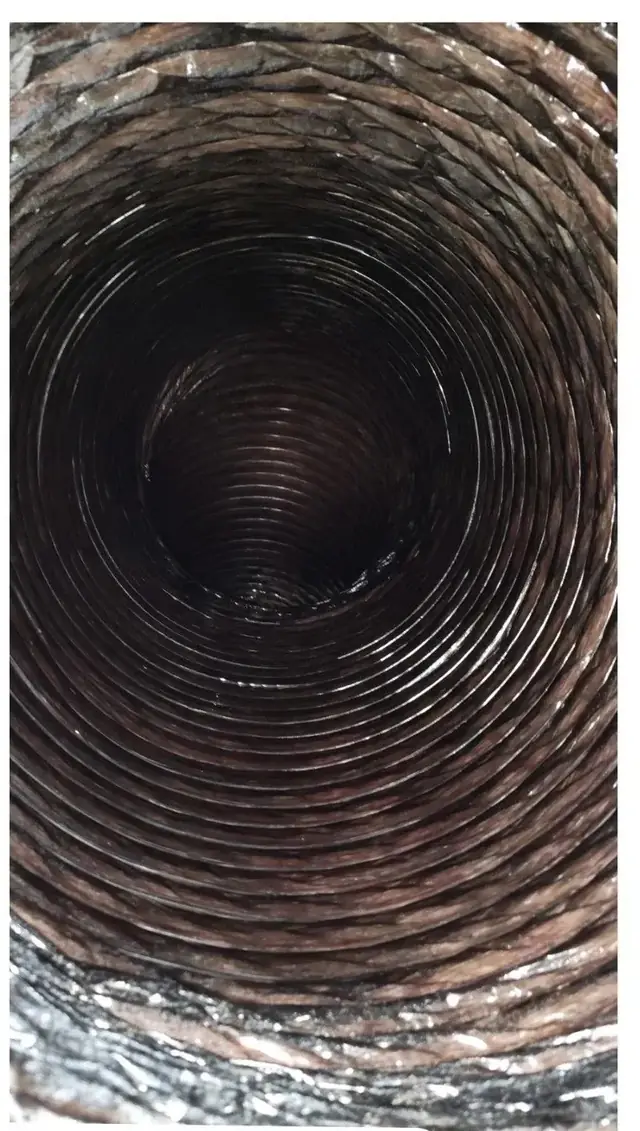
What most people picture
Ask a homeowner what duct cleaning is and you will hear one of two answers. Either a technician holds a vacuum hose up to the vent grill, or a spinning brush gets pushed down the pipe. Both can look like work. Neither reaches very far.
A quick vacuum from the grill often just stirs dust around. It clears the first foot or two near the register and leaves the rest of the run alone. The ductwork behind your walls and above your ceilings is where most of the system lives, and that is where the debris is.
What negative air actually means
Negative air means the duct system is held under suction, so air moves toward the machine instead of out into your living space. Our NADCA-certified equipment is a 185 PSI negative-suction sweeper paired with a HEPA vacuum. The suction pulls dust, pollen, pet hair and debris from deep inside the ductwork. The HEPA filtration keeps the fine particles inside the machine instead of letting them drift back into your rooms.
In practice, you will see a large flexible trunk line running from the machine up to the ductwork. The machine does the pulling. The technician makes sure every branch and vent gets worked, not just the easy ones.
Why we skip the brushes
A brush agitates. It breaks debris loose, but it also pushes some of it farther along the pipe, which is the opposite of removing it. In flexible duct, where the inner liner is thin, aggressive brushing is also hard on the material you are trying to protect.
The same logic applies to dryer vents. We use a high-negative-suction sweeper rather than traditional wire brushes, and our method does not damage or disconnect your pipe line. The lint comes out through the pipe and into the machine. It does not get shoved down the line toward the exit.
Why the grill-level vacuum falls short
The vent you see in the ceiling or wall is the end of a long path. Behind it sits a branch that runs back toward a main trunk, often with bends, a boot where the vent attaches, and sometimes a long stretch through the attic. A hose at the grill only has strength where it touches. Past the first bend, the pull weakens, and whatever was loose may settle again as soon as the technician leaves.
A system cleaned under negative air is different because the suction is applied to the duct system itself, not just to the opening. The airflow runs the full length of the branch toward the machine, carrying loosened debris with it.
What to expect on the day
Our technicians are clean and respectful, and treat your home as if it were their own. A customer named Eric N. wrote that they were very neat, respectful of the house, and left everything cleaner than they found it. A few simple things on your end make the visit go faster:
- Clear a path to the air handler and any attic access.
- Move small furniture or items that sit right under ceiling vents.
- Let us know about any vents that never seemed to move much air.
- Keep pets in a quiet room, since doors and vents will be open and equipment will be running.
What the job covers
- A walkthrough first, to count your vents and plan the work.
- Suction cleaning of the supply branches and the intake side of the system.
- Inspection and cleaning of the air-handler coils when they need it, since dirty coils cut into airflow and energy savings.
- A dryer vent cleaning in the same visit if you want one.
- Before-and-after pictures of your system once the job is done.
How long it takes
For an average home, plan on about 1.5 to 2.5 hours. A Google reviewer described a visit of about two hours that covered all eight ducts, the intake and the dryer vent, plus the outside condenser unit that was packed with leaves. That lines up with what we tell people on the phone: the vent count drives the estimate, and the walkthrough confirms it.
Questions worth asking any duct cleaner
- Do you clean with suction on the whole system, or only vacuum at the grill?
- Do you use brushes, and on what kind of duct?
- Is your estimate based on my vent count, and will you confirm it on a walkthrough?
- Will I get pictures or video of my own system when you finish?
- Is your equipment NADCA-certified, and are you licensed and insured? (Our CSLB License No. is 1135877.)
Any good company will answer those without hesitating. If you would like our answers for your house, call (714) 253-9515 and we will give you a free estimate.
ABC Air Duct Cleaning & Dryer Vent Cleaning, (714) 253-9515
Call (714) 253-9515More articles
How Often Should You Clean Your Air Ducts in Orange County
Three to five years is the usual rhythm, but a few things in your house can move that number sooner.
Signs Your Dryer Vent Is Clogged and Why Long Runs Need a Yearly Check
A clogged dryer vent usually tells you before it becomes a problem, if you know what to look for.